Ask three companies about their jetter and you may hear three pressure figures, a flow rating and a lot of nozzle names. None of it matters until you know what each piece does inside a 3- or 4-inch home drain. Jetting is a cleaning method, not a repair, and the equipment has to be matched to the pipe.
PSI and GPM: What Each Number Does in a Drain Line
PSI is pounds per square inch, the pressure of the water leaving the nozzle. It is what loosens grease, scale and soft blockages. GPM is gallons per minute, the volume of water moving through the hose. Flow is what carries the loosened material away down the pipe.
A rough picture: the pump creates flow, and the tiny openings in the nozzle resist it. That resistance is what you read as pressure. Plenty of psi with little flow can blast one spot clean and leave the debris sitting there; healthy flow moves it down the line toward the street connection. Plumbing trade sources describe residential-class machines of about 1.3 to 2.9 gpm as suited to lines up to 4 inches, while 3.0 to 4.0 gpm units are cited for lines up to 6 inches. For a longer read on the two measurements, see jetter psi vs. gpm.
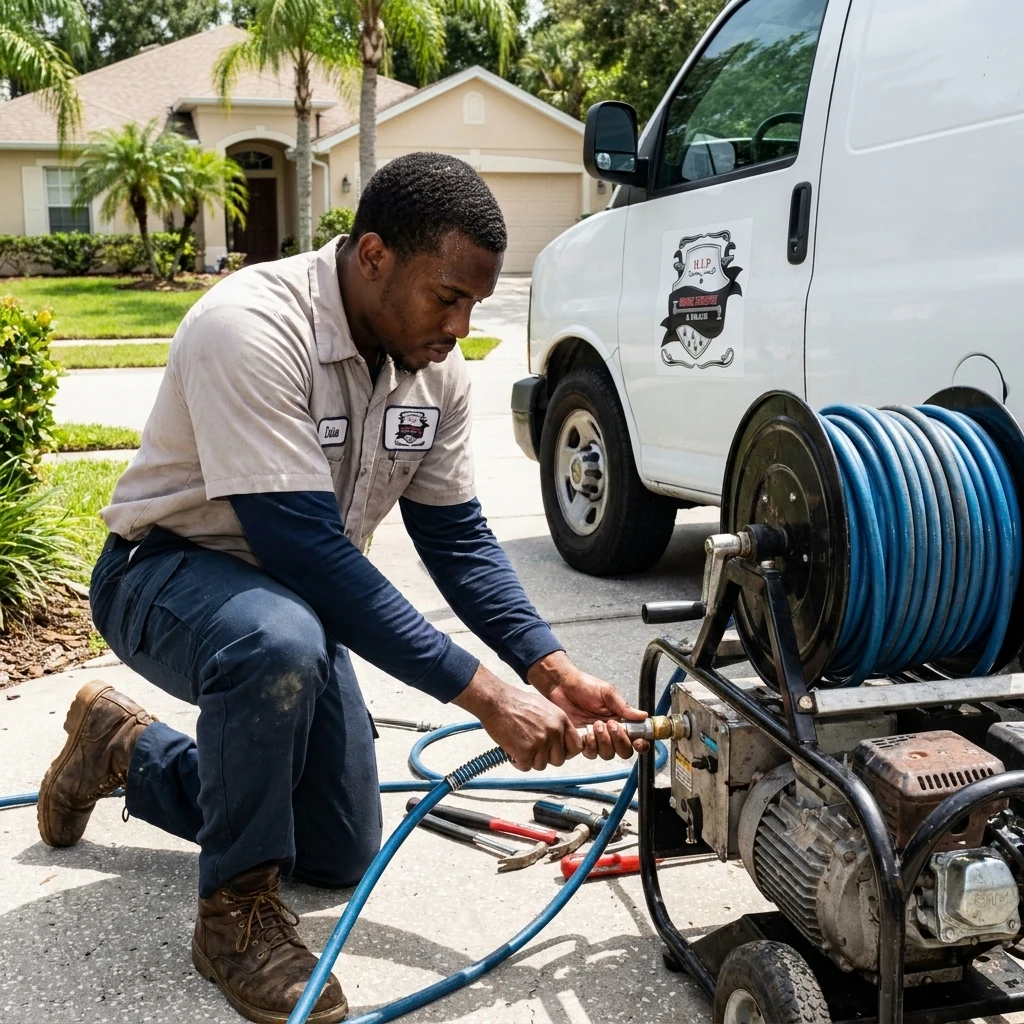
Hydro Jetting Pressure for Residential Lines in Wesley Chapel
Trade sources quote jetter pressure at about 1,500 to 4,000 psi across the industry, with roughly 3,000 psi cited as an upper range for coated pipes. Those are industry-wide figures, not a promise about any one machine or any one line. We do not publish the setting we run on a given job, because the setting depends on pipe material and what the camera shows.
Nozzle Types and What Each One Is For
The nozzle is the part that shapes the water, and one machine carries several. The camera decides which goes in first.
Forward-penetrating nozzles
The jet points mostly ahead, with a few rear jets pulling the hose along. Its job is to bore through a blockage that has closed the pipe. It is the opening move on a stopped line, and it does little to the pipe wall.
Rotating or multi-jet nozzles
Several jets spin or fan out, some aimed back so they pull the hose forward. This is the workhorse for the wall-scouring pass: grease, soap film and light scale come off the entire circumference as the nozzle is drawn back toward the cleanout.
Root-cutting and chain-type heads
These carry blades, a chain or a cutting edge on a spinning head. Trade sources note that root cutters are generally designed for more flow than small residential machines deliver, so a heavy root mass may call for a cutter head or mechanical cutting first, and a jetting pass after to flush what was cut. See root-cutting nozzles vs. chemical root killers and our root removal page.
Descaling heads
Warthog-style heads use tight, rotating jets for hardened deposits. Water drawn from Florida’s limestone-fed aquifer is rich in calcium and magnesium, and very hard water can leave scale in pipes. Where the camera shows scale, a descaling head is the nozzle for the job.
Hose Size, Reel Length and Reach
Hose choice follows the line. A narrow, flexible hose suits kitchen and branch lines and tight bends. A larger, heavier hose carries more flow on a main sewer line but is stiffer to steer around turns. Reel length sets the reach: the technician can only clean as far as the hose travels from the cleanout, which is why knowing where your sewer cleanout is matters.
Why More PSI Is Not Better
- Old or thin pipe. Cast iron whose wall has corroded can fail under pressure it would have survived when new.
- Brittle materials. Orangeburg, the bituminous fiber pipe used for laterals into the early 1970s, can delaminate or collapse, so it is a candidate for a camera and a repair referral, not a jetter.
- Joints and offsets. High-pressure water hitting a displaced joint can push on it instead of passing it.
- No extra reach. Past what the buildup needs, more pressure does not clean the line better. Flow and nozzle choice do that.
Pipe Material Limits for Wesley Chapel Homes
Most homes in Wesley Chapel were built after 2000, and homes from that era are generally plumbed in PVC or ABS. Plastic suits jetting well. In the older parts of the service area it is a different story: Dade City, the core of Zephyrhills and the older neighborhoods of Temple Terrace may still have clay, cast iron or Orangeburg laterals. See Dade City, Temple Terrace and what jetting does to each pipe material.
That is also why a camera pass comes first on any line of uncertain age. It shows material, offsets, cracks, root entry and sags before any water is turned on. Jetting is a poor fit for collapsed, bellied or cracked pipe, and for a septic drainfield. Those need a different answer.
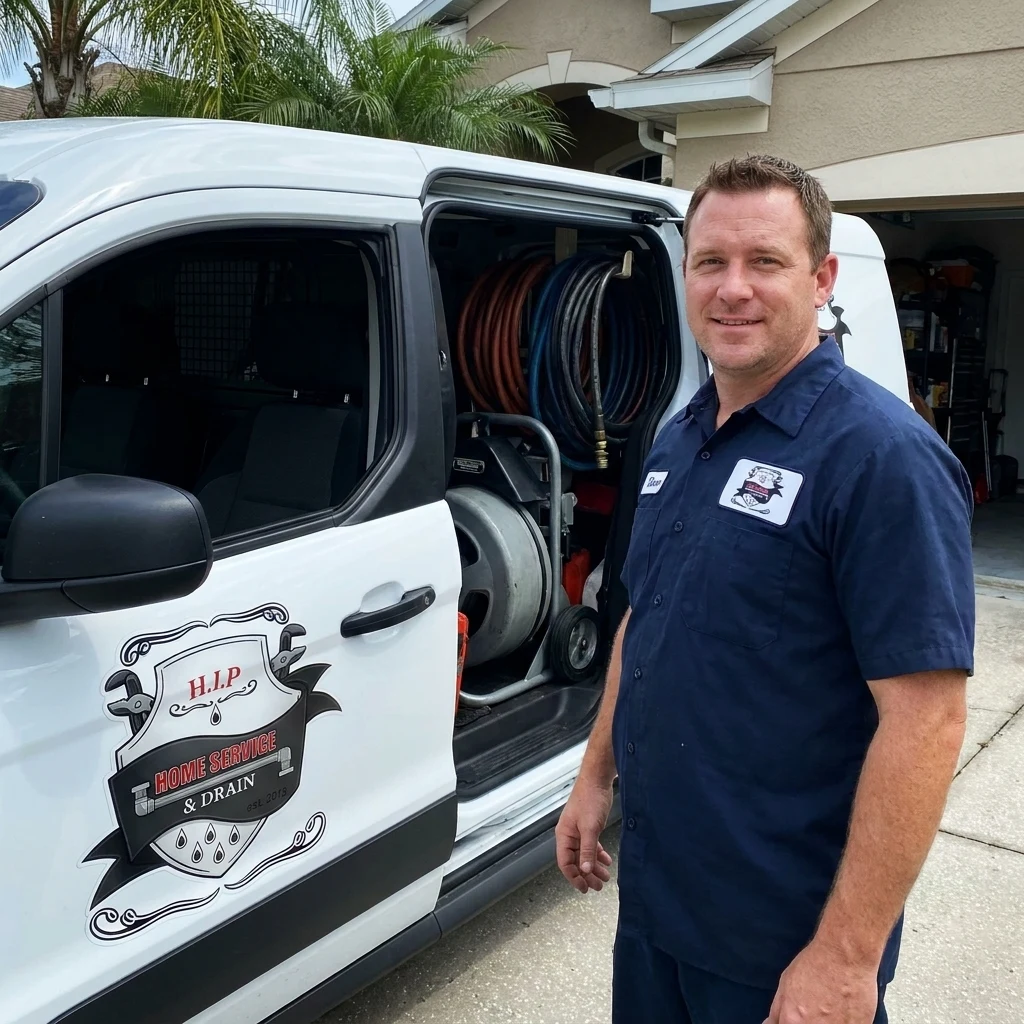
What Suits a 3- or 4-Inch Home Line in Wesley Chapel
A typical home sewer lateral is 3 to 4 inches, which is squarely within the range a residential-class jetter is built for. The usual order of work: camera first, then a forward nozzle if the line is stopped, a rotating head to scour the walls, a cutter if roots demand one, and a final camera pass to confirm the line is clean and undamaged.
See it on sewer line hydro jetting, the price on the hydro jetting cost guide, and the visit step by step in what to expect.
Not sure what your line can take?
Start with the camera. It shows what is in the pipe and what the pipe is made of, so the jetter, the nozzle and the pressure can be chosen on evidence.
CALL 813-733-7188Hydro Jetting PSI and Nozzle FAQs
No. Pressure is only half the picture, and past a point it just raises the risk to the pipe. Flow in gallons per minute carries debris out, and the nozzle decides how the water is aimed. A residential line is cleaned with settings matched to its material and what the camera shows.
We do not quote a single number, because the setting depends on pipe material and what the camera shows. Plumbing trade sources describe a broad range of roughly 1,500 to 4,000 psi across jetters, with lower pressure used on coated or fragile pipe. A newer PVC line tolerates more than an old cast iron one.
Light roots, yes. Heavy root masses are a harder job for a small residential machine, and a root-cutting head or mechanical cutting may need to go first, with jetting after to flush the cuttings. The camera tells us which case you have. Jetting does not stop roots from growing back.
Often, but not automatically. Older clay and cast iron can be jetted if the walls are sound; Orangeburg fiber pipe should not be jetted at all because it can delaminate or collapse. We run a camera first on any line that might be older, and we use snaking or a repair referral if jetting is risky.
Ask the technician to name it. A good write-up identifies the line cleaned, the method and the nozzle type, along with what the camera found, so you are not guessing about the equipment that went through your pipe. You are entitled to that answer on any job, ours included.