Whether hydro jetting is safe depends mostly on what the pipe is made of and what shape it is in. The same machine that cleans a PVC sewer lateral without a problem might damage a corroded cast iron stack. Here is what each common material does under high-pressure water, and why we look first.
The Quick Reference
| Material | Typical era | Jetting verdict |
|---|---|---|
| PVC / ABS | Early 1970s onward; standard by the 1980s | Generally fine at residential pressure |
| Cast iron | Post-WWII boom into the late 1970s | Often fine if the wall is sound; camera first |
| Vitrified clay | Common for outdoor laterals before the 1950s | Case by case; joints and cracks decide |
| Orangeburg (fiber) | About the 1940s to early 1970s | Avoid; it can delaminate or collapse |
These dates are approximate, because trade sources disagree on exact years, and a home's age does not guarantee what is in the ground. A remodel or a repair may have swapped a section.
PVC and ABS: The Easy Case
Plastic drain pipe has smooth walls, tight joints and no corrosion. At the pressures used for residential lines it handles jetting well, and most of Wesley Chapel, built mostly after 2000, falls here. The risks are different: a poorly glued joint, a section knocked out of alignment during construction, or a sag that holds water. Jetting cleans around those, but a camera is how you learn they exist.
Cast Iron: Sturdy, Until It Is Not
Cast iron is heavy and durable, and many cast iron lines clean perfectly well. The problem is corrosion. Over decades the inside surface builds scale in rough tubercles, and the wall can thin from the outside and the inside. Jetting removes the scale, which restores flow, but the scale may also have been plugging small holes. A camera shows pitting and flaking before the nozzle goes in. If the wall looks thinned, we choose gentler options or recommend a repair.
Clay Tile: Many Joints, Many Variables
Vitrified clay is rigid and chemically inert, but it comes in short sections, so a lateral has many joints. Those joints are where roots enter, and where shifting ground offsets one section from the next. Jetting a sound clay line is routine. Jetting one with cracked tile or a badly offset joint can push debris outward or worsen damage. The camera decides.
Orangeburg: Leave It Alone
Orangeburg is a pipe made of wood fiber and pitch that was used for sewer laterals from roughly the 1940s into the early 1970s. Its maker was out of business by 1974. It has a typical service life of about 50 years, and some failed far sooner. It is brittle and prone to deforming or delaminating, and high-pressure water is not what you want near it. If a camera reveals Orangeburg, a gentle cable pass may be the most we do, and a repair contractor is the real answer.
What About Pasco County Homes?
Most Wesley Chapel, Land O' Lakes growth areas and New Tampa homes are plastic, built since the 1990s. Older cores, such as parts of Dade City, central Zephyrhills and the older sections of Temple Terrace, may still have clay, cast iron or Orangeburg laterals. The word is "may": we do not know until a camera goes in. The resort-era condo buildings around Saddlebrook are also older than most of the area, which makes camera work before jetting a sensible habit there.
The Second Camera Pass
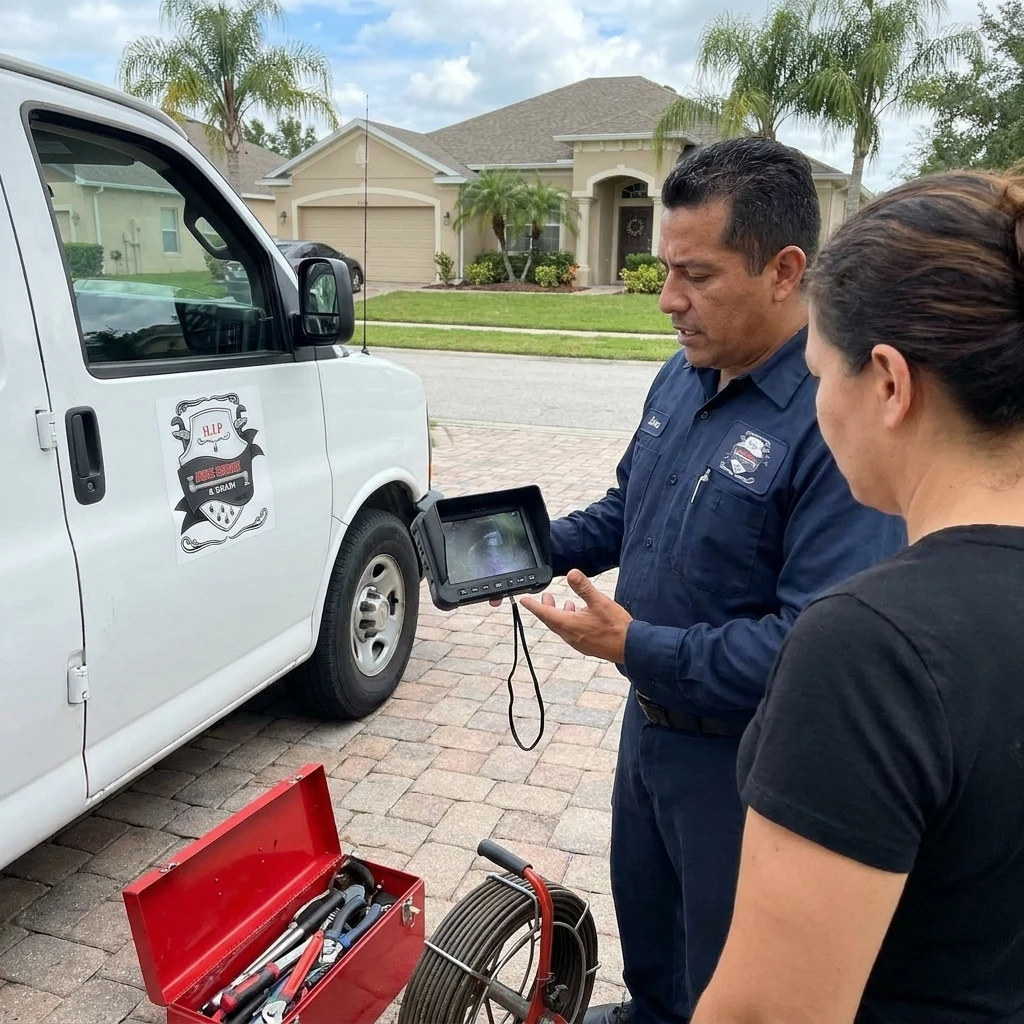
After jetting, a second pass of the camera confirms two things: that the pipe is clean to the wall, and that nothing was disturbed while cleaning. Plastic that has been jetted should look uniformly clean. Older materials should show no new cracks, no displaced sections and no debris stranded at a joint. Skipping that check is how a cleaning turns into a surprise later, so we treat it as part of the job rather than an extra.
When We Will Not Jet a Line
- The camera shows a collapsed, bellied or badly offset section.
- The pipe is cracked or the wall is visibly thinned.
- It is Orangeburg.
- Roots have broken the pipe itself rather than entering a joint.
- The line leads to a septic drainfield; jetting into a drainfield is not normal service.
In those cases a cable is the gentler tool, and a broken pipe needs a plumber or repair contractor. We clean, jet and inspect; we do not do excavation or pipe replacement, so we will point you to the right person. Our sewer camera inspection page covers what the video shows, and hydro jetting services explains how we set up a job once the pipe checks out. For the pressure side of this, read hydro jetting PSI and nozzles explained.
Older house, unknown pipe?
Give us the build year and describe the pipe at the cleanout. The camera shows what is under the yard, and we pick the pressure from that, or recommend a repair if the pipe is too weak.
CALL 813-733-7188Hydro Jetting and Pipe Material FAQs
Generally yes. PVC and ABS have smooth walls, tight joints and no corrosion, and they handle residential jetting pressure well. The remaining risks are installation faults like sags or poorly glued joints, which a camera shows.
It can if the wall has corroded thin. Sound cast iron usually jets fine and the scale it removes restores flow. A camera shows pitting and flaking first, and a thinned section calls for gentler options or repair.
Sometimes. A sound clay lateral cleans routinely, but cracked tile or offset joints change the answer. The camera tells us whether the line can take the pressure, and a gentler approach is used when it cannot.
Orangeburg is a bonded wood-fiber pipe used for sewer laterals from about the 1940s into the early 1970s. It is brittle and can delaminate, so high-pressure jetting is avoided. A camera confirms it, and repair is usually the real fix.
The age of the home is a clue, but not proof. A camera inspection shows the actual material, along with offsets, cracks and root entry. Ask for it before any jetting if the home predates the 1990s.