Most of Wesley Chapel was built after 2000. The population went from about 5,700 in 2000 to roughly 65,000 in 2020, and almost every house in that jump was plumbed in plastic. New pipe, smooth walls, no rust. So why do owners in these subdivisions keep calling about slow kitchen sinks and backed-up toilets?
Because the clogs in newer neighborhoods are rarely a pipe problem. They are a what-went-down-the-drain problem, and plastic pipe is no defense against it.
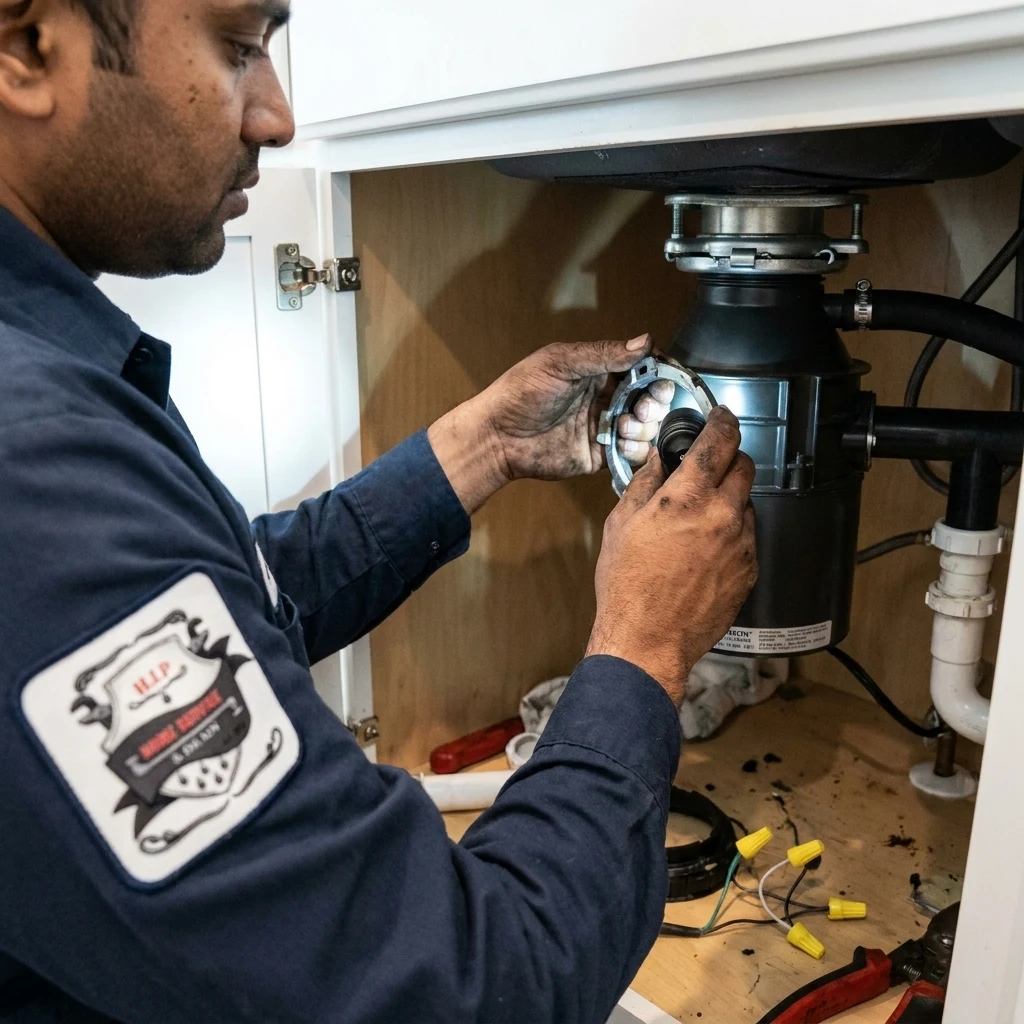
What Pasco County Says Wipes and Grease Do
Pasco County Utilities has been blunt about this. The county calls the problem "ragging": baby wipes, diapers, dental floss and paper towels that end up in its sewer pumps. Its Waste Water Services director told Tampa Bay 28 that wipes sold as "flushable" mix with the grease and oils already in the system and turn into rope-like pieces that can be several feet long. The county's grease page adds that fats, oils and grease poured down drains or disposals can build up in the collection system and cause backups into sinks, toilets and drains.
The county operates hundreds of lift stations to move sewage uphill across flat, fast-growing terrain. That is the big version of the problem. The small version happens inside a three- or four-inch lateral running under your slab and yard.
How a Clog Builds in Smooth Plastic Pipe
Grease is liquid and harmless-looking when it leaves the pan. It cools inside the pipe, usually at the first elbow or the point where the kitchen line meets the main drain, and sticks as a soft film. Each wash of water leaves a little more behind. Over months that film narrows the pipe from the wall inward.
Then something catches on it. A wipe, a wad of hair, a bit of dental floss, a paper towel. Fibers snag on the greasy ledge, more grease sticks to the fibers, and the mass grows from both ends. Low-flow toilets and efficient dishwashers help the water bill but send less water down the line to push things along. A bare minimum of flow is what lets a mass hold its position.
Where it tends to happen first
- Kitchen branch line. Grease from the sink and disposal meets cold pipe under the slab.
- The first fitting after a long flat run. Slab-on-grade homes have little fall to work with, so flow slows at transitions.
- The tie-in to the main. Wipes snag where one line merges into another.
- Townhome and shared building drains. One household's habits can back up a neighbor's fixtures.
What Actually Prevents It
None of this needs a gadget. It needs three habits.
- Scrape, wipe, bin. Let pan grease cool, scrape it into the trash or a jar, and wipe the pan with a paper towel before washing. Hot water and dish soap move grease a few feet down the line; they do not remove it.
- Strainers in every sink. The county recommends them. A ten-dollar basket catches the bits that become the snag.
- A small lidded bin in each bathroom. Wipes, floss, cotton swabs, feminine products and diapers go in the bin. A "flushable" label is a marketing claim, not a plumbing standard.
A garbage disposal does not make grease disappear. It chops food into smaller pieces and sends the fat on its way, which is why the kitchen line is where we expect to see a ring of buildup first.
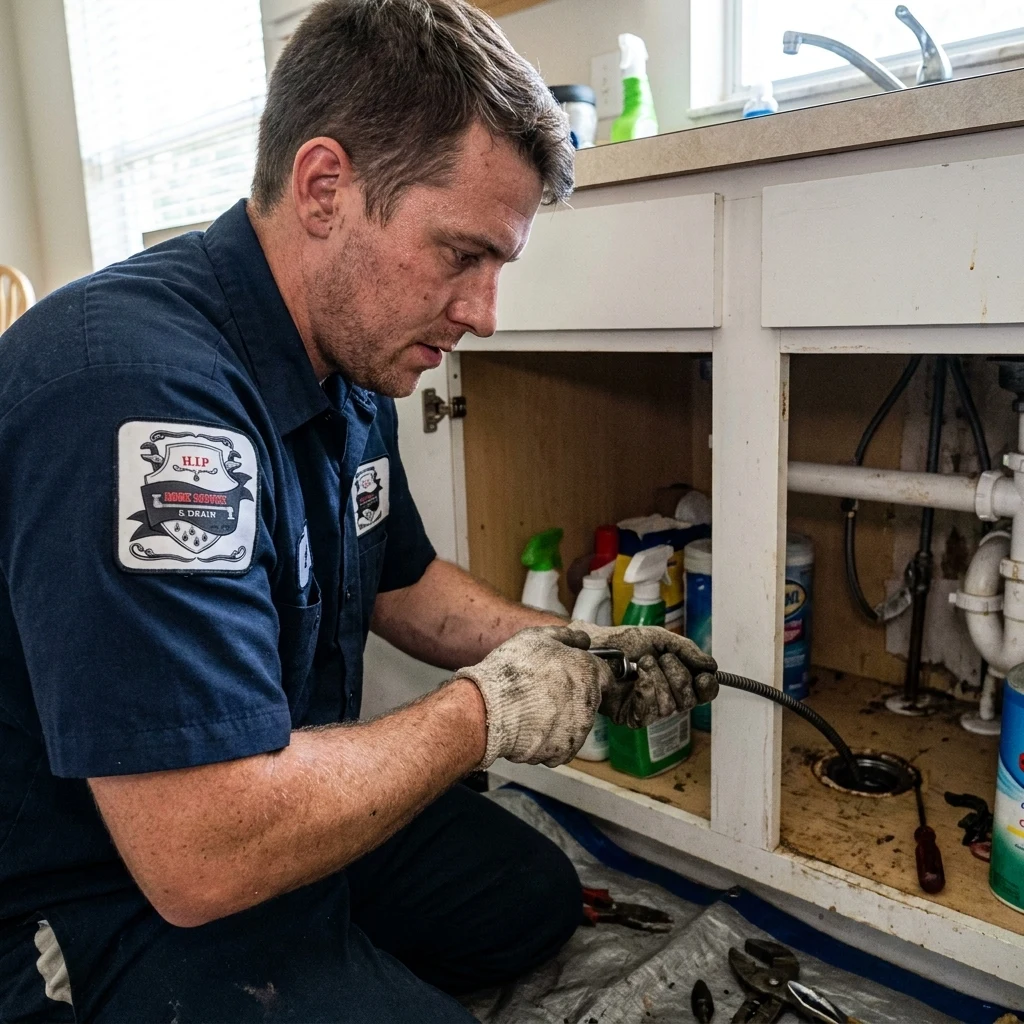
Snake or Jet a Wipe-and-Grease Clog?
A cable can punch through a wad of wipes and restore flow that day. It will not remove the grease film the wad was stuck to, which is why the same sink slows down again a few weeks later (we cover that in why drains clog again after snaking). If the line has clogged more than once, or the camera shows a coating along the wall, kitchen line grease jetting is the better fit. It scours the whole run back to bare pipe. A kitchen line jetting visit runs $275 to $450; a kitchen drain snake is $150 to $275. The hydro jetting cost guide explains what moves a price within those ranges.
If the problem is in the main line rather than a single sink, hydro jetting of the lateral is the larger job, and a camera pass shows whether it is wipes, grease or something else. Camera work is $150 to $300 on its own and is often credited toward the work the same visit.
Why It Shows Up Across the Newer Communities
Homes in places such as Epperson and the other post-2010 communities have builder-grade fixtures, tight pipe runs and a lot of households sharing the habits described above. None of that is a defect. It simply means the first sign of trouble is usually behavioral, and the fix is usually a cleaning rather than a repair. Our Wesley Chapel hydro jetting page lists what we cover across the SR-54 and SR-56 corridors.
When a Clog Is Not Just Wipes
If the clog returns within days of a professional cleaning, if several fixtures back up together, or if you smell sewage near the yard cleanout, the line may have a sag or a joint problem. A camera shows that. Jetting cleans a pipe; it does not straighten a pipe that has settled, and we will say so if that is what the video shows.
Slow sink in a house under twenty years old?
Tell us how long the kitchen drain held after its last cleaning and whether the disposal runs daily. We will say if a cable is enough or if the grease film needs a jet pass.
CALL 813-733-7188Wipe and Grease Clog FAQs
Pasco County lists wipes among the items that foul its sewer pumps, and its wastewater director says wipes sold as flushable mix with grease into rope-like pieces. The safe rule is toilet paper only, and everything else goes in the trash, whatever the package says.
Only for a moment. Hot water pushes grease a few feet down the pipe, where it cools and sticks again. Scraping pans into the trash and using a sink strainer prevents far more buildup than running hot water afterward.
Yes. Smooth plastic does not rust or scale, but grease and wipes still stick at fittings and flat sections. Newer homes mostly clog because of what goes down the line rather than because the pipe has aged.
No. A disposal grinds food into smaller bits and passes the fat along with them. It often makes the kitchen branch line clog sooner because the ground food gives grease something to cling to inside the pipe.
If the same drain has clogged more than once, or a camera shows a coating on the pipe wall, jetting is the better fit because it removes the film. A one-time clog from a single object can be cleared with a cable.