Tampa Bay gets well over half of its annual rain between June and September, mostly in afternoon thunderstorms. In 2024 Tampa recorded about 52 inches in those four months alone, a record. For a sewer system that runs on gravity and pumps across flat, sandy ground, that is a lot of water, and you notice it in two ways: slow drains the day after a storm, and the occasional full backup.
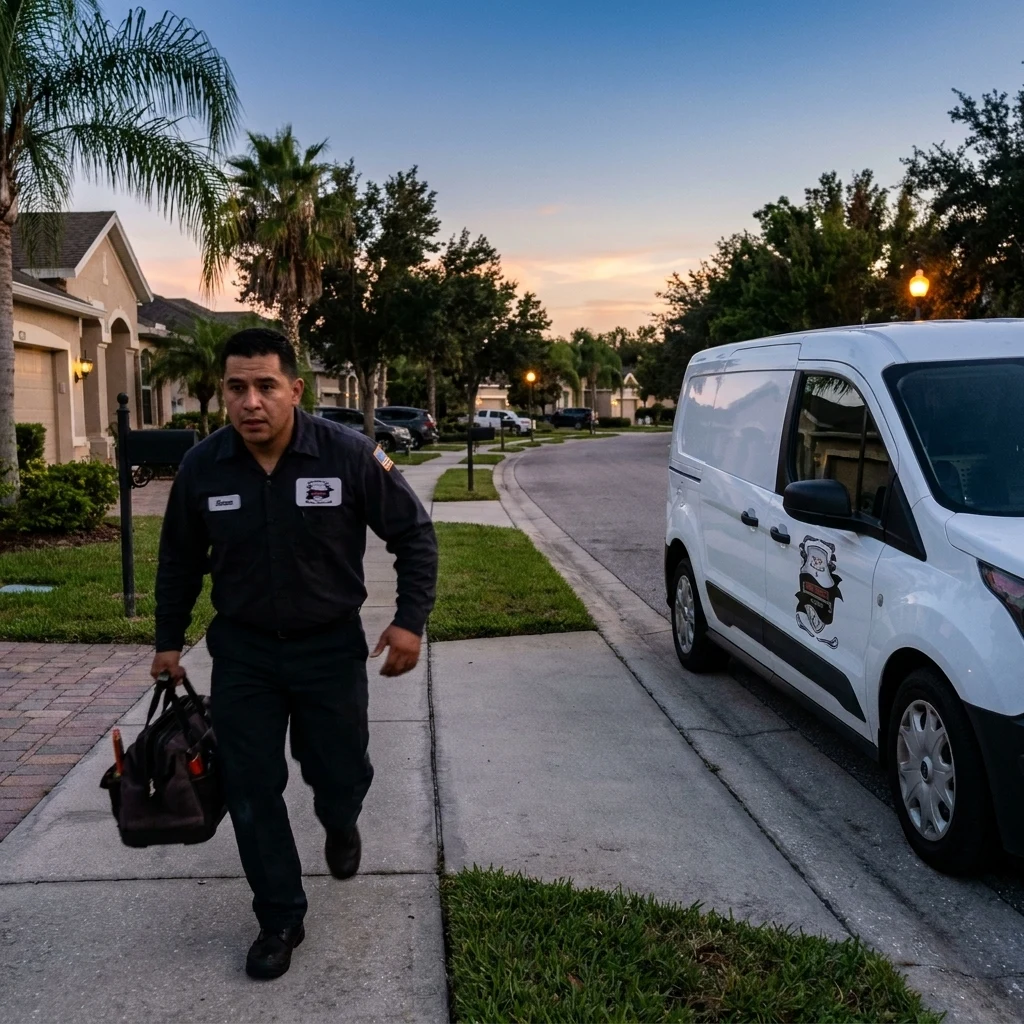
Why Rain Affects a Sewer Line That Is Not Connected to the Roof
Sanitary sewer lines are not supposed to take rainwater. In practice, water gets in anyway.
- Saturated sand. Much of the local soil is sandy flatwoods with a layer beneath that restricts drainage, and some mapped soil types in Pasco County hold a high water table for months. When the ground is saturated, groundwater presses on every joint of a buried line.
- Loose joints and small cracks. Groundwater seeps into any weak point. That extra flow narrows the margin on a line that was already partly blocked.
- Roots. They follow moisture. A wet summer gives them more reason to push into an opening, and a thin root hair catches tissue and grease on the next flush. See root-cutting nozzles vs chemical root killers for what to do about it.
- Lift stations. Pasco County Utilities runs hundreds of lift stations to move wastewater across the county; its wastewater director put the count at 810. When a storm adds flow and the stations are already dealing with wipes and grease, the system gets stressed.
This is reasoning from the local soil and rainfall record, not a claim about any one street. Whether a particular backup came from your lateral or from the county main is something you can often work out, as the next section shows.
Is It Your Line or the County's?
- Check whether neighbors are affected. If several houses on your street have slow drains after the same storm, the cause may sit in the county main or a lift station.
- Look at the lowest fixture. A backup that appears first in a floor drain, tub or ground-floor shower points to the main line. See how to find your sewer cleanout.
- Check the cleanout carefully. If it is full of water, the blockage is downstream of it, between your cleanout and the street. If it is dry, the blockage is between the house and the cleanout.
- Check for sewage smells or wet ground in the yard. That can indicate a broken or displaced pipe.
If the problem seems to be on the county side, contact your utility. If it looks like it is on your side of the connection, a camera will tell you why.
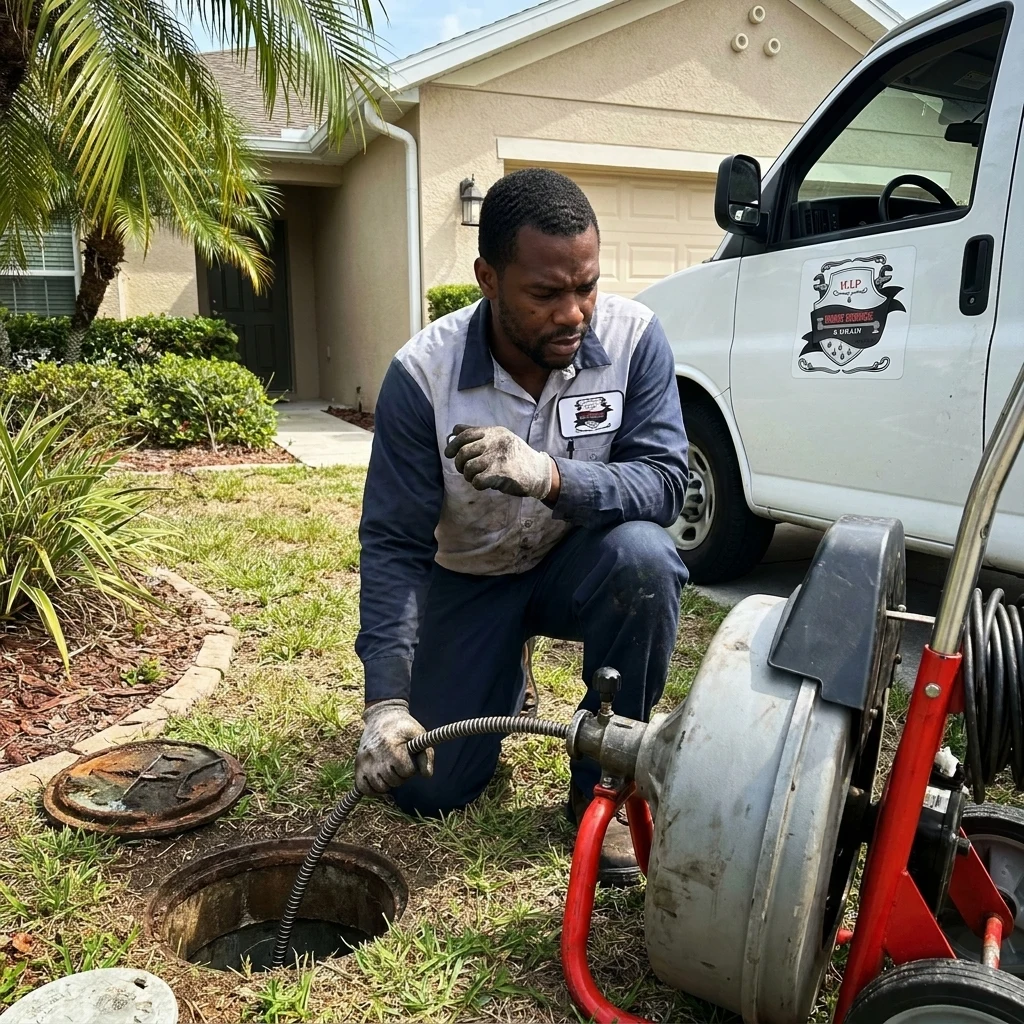
What to Do During and After a Backup
- Stop running water: no laundry, dishwasher or showers. Every gallon goes into a line that is not draining.
- Do not pour chemical drain cleaner into a main line backup. It does not reach the blockage and complicates the work.
- Keep people and pets away from any standing sewage, and avoid touching it.
- Photograph affected areas for your records.
- Call. We offer 24/7 emergency service and same-day visits.
Keeping Rain Out on Your Side of the Line
A few things are in the homeowner's control. Make sure the cleanout cap is present and tight, since a missing or cracked cap lets surface water and dirt into the line. Keep downspouts and sprinkler runoff pointed away from the cleanout. Rain gutters, sump pumps and yard drains should never be tied into the sanitary sewer. If you are unsure how a drain in your yard is connected, ask before the next storm rather than during it.
The Camera-Then-Clean Sequence After a Storm
A heavy rain exposes a line that was already marginal. The practical sequence is a sewer camera inspection to see what is happening, then cleaning to remove whatever is restricting flow, whether that is grease, roots or a pile of wipes. Sewer line hydro jetting scours the full run; a main line snake ($225 to $450) can reopen a simple blockage; and jetting with moderate roots is $400 to $750. If the camera shows a broken pipe, jetting is not the cure, and we will say so and refer you to a repair contractor.
Communities Where Groundwater Matters More
Communities built beside wetlands and preserves, like Watergrass, sit near wet ground for much of the rainy season, and it is reasonable to expect higher groundwater around buried lines there. For an overview of how we serve the corridors, see our Wesley Chapel page, and for a single stubborn fixture, drain cleaning and snaking is a quicker, cheaper start.
Be Ready Before June
The cheapest protection is knowing where your cleanout is, keeping wipes and grease out of the line, and having a camera look at any line that has backed up before. A clean, inspected line has more margin when the afternoon storms arrive.
Backing up now? Check the cleanout, then call
If water stands in the cleanout or several drains back up together, stop using water and call. A camera pass at the cleanout shows whether your lateral is clear, which tells you whether to call the county as well.
CALL 813-733-7188Rainy Season Backup FAQs
Saturated ground puts pressure on buried joints and lets groundwater seep into small cracks, which narrows the margin on a line that is already partly blocked. Roots, grease and wipes then finish the job. A camera shows which factor applies.
If several neighbors have slow drains after the same storm, the county main may be involved. Opening the cleanout can help: water standing in it means the blockage is downstream, while a dry cleanout points upstream, toward your house.
No. Chemical cleaners do not reach a main line blockage, they can sit in standing water, and they make the work harder and less safe for whoever services the line. Stop using water and call instead.
If sewage is coming into the house or more than one fixture is affected, treat it as one. Stop using water, keep people and pets away, and call. We offer 24/7 emergency service with same-day response.
It removes grease, roots and debris that narrow a line, which gives it more margin during heavy rain. It does not seal cracks or stop groundwater from entering a damaged pipe, so a camera check is important.