Ads for hydro jetting love to quote one number: pounds per square inch. 4,000 psi sounds like a lot, and it is. But if you are choosing a company to put a jetter into your sewer line, psi is only half of the picture and, for a residential line, not always the more useful half.
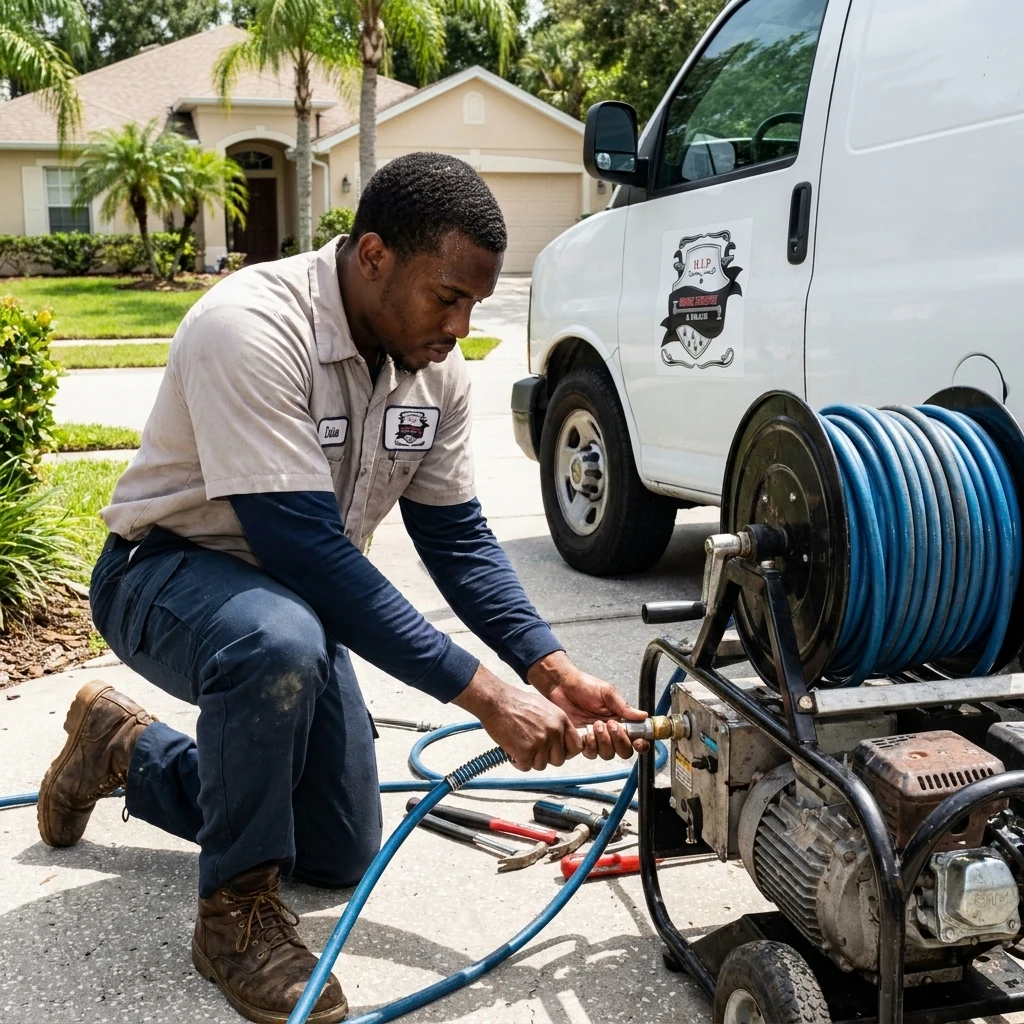
PSI Is How Hard. GPM Is How Much.
PSI (pounds per square inch) is the pressure at the nozzle. It is what breaks up a hard deposit and cuts through a soft one. GPM (gallons per minute) is the volume of water the pump moves. It is what carries the loosened debris down the pipe and out.
A common comparison: pressure is the scrub brush, flow is the rinse. A brush with no water just moves dirt around. A hose with no brush leaves the stuck-on film behind. A jetter needs both, and sized to the pipe.
The Ranges You Will Hear Quoted
Plumbing contractors generally quote working pressures anywhere from about 1,500 to 4,000 psi, with a lower ceiling, around 3,000 psi, cited for coated or fragile pipe. On flow, machines in the 1.3 to 2.9 gpm range are usually described as suited to lines up to about four inches, while 3.0 to 4.0 gpm units are described for lines up to six. Those are industry generalities, not a promise about any particular rig. We do not publish our setting because the right one depends on pipe material and what the camera shows.
| Factor | What it does | What goes wrong when it is off |
|---|---|---|
| High psi, low gpm | Cuts a deposit at the nozzle | Debris loosens but does not travel; it can pile up downstream |
| Moderate psi, good gpm | Scours the wall and moves material out | Slow going on hard scale or a hard-packed root mass |
| Very high psi on weak pipe | Cleans quickly | Risk of damaging brittle or corroded pipe |
A Quick Way to Compare Two Machines
Engineers estimate the work a pump does with a simple formula: psi multiplied by gpm, divided by 1,714, gives hydraulic horsepower. A 4,000 psi machine moving 2 gpm is about 4.7 hp of water power. A 3,000 psi machine moving 4 gpm is about 7 hp. The lower-pressure unit has more to work with because it pairs the pressure with more water. This is only a yardstick, and real performance also depends on the hose and nozzle, but it explains why a headline psi tells you little.
Hose Size, Length and Nozzle Matter Too
Water loses pressure as it travels through hose, and more of it the longer and thinner the hose is. A long run out to the street connection loses more than a short kitchen branch. The nozzle is where all of that is converted into force. Its orifice sizes set the real pressure at the cutting point, and its jet angles decide what happens.
- Forward-penetrating: a jet pointed ahead, to cut through a blockage.
- Rotating or multi-jet: rear-facing jets that scour the pipe wall and pull the hose forward.
- Flushing: lower force, higher volume, for moving loose debris.
- Root-cutting: built to remove roots; these generally want more flow than a small residential machine delivers, so a heavy mass may call for a cutter head first and jetting second.
For the longer version, our guide on hydro jetting PSI and nozzles goes through each nozzle type and when it gets used.
Why More Pressure Is Not Automatically Better
The pipe sets the limit, not the machine. Modern PVC and ABS handle residential jetting well. A cast iron line with thinned walls, an old clay tile with cracked joints, or Orangeburg pipe is a different situation, and extra pressure there creates repair work. We cover those materials in what hydro jetting does to each pipe.
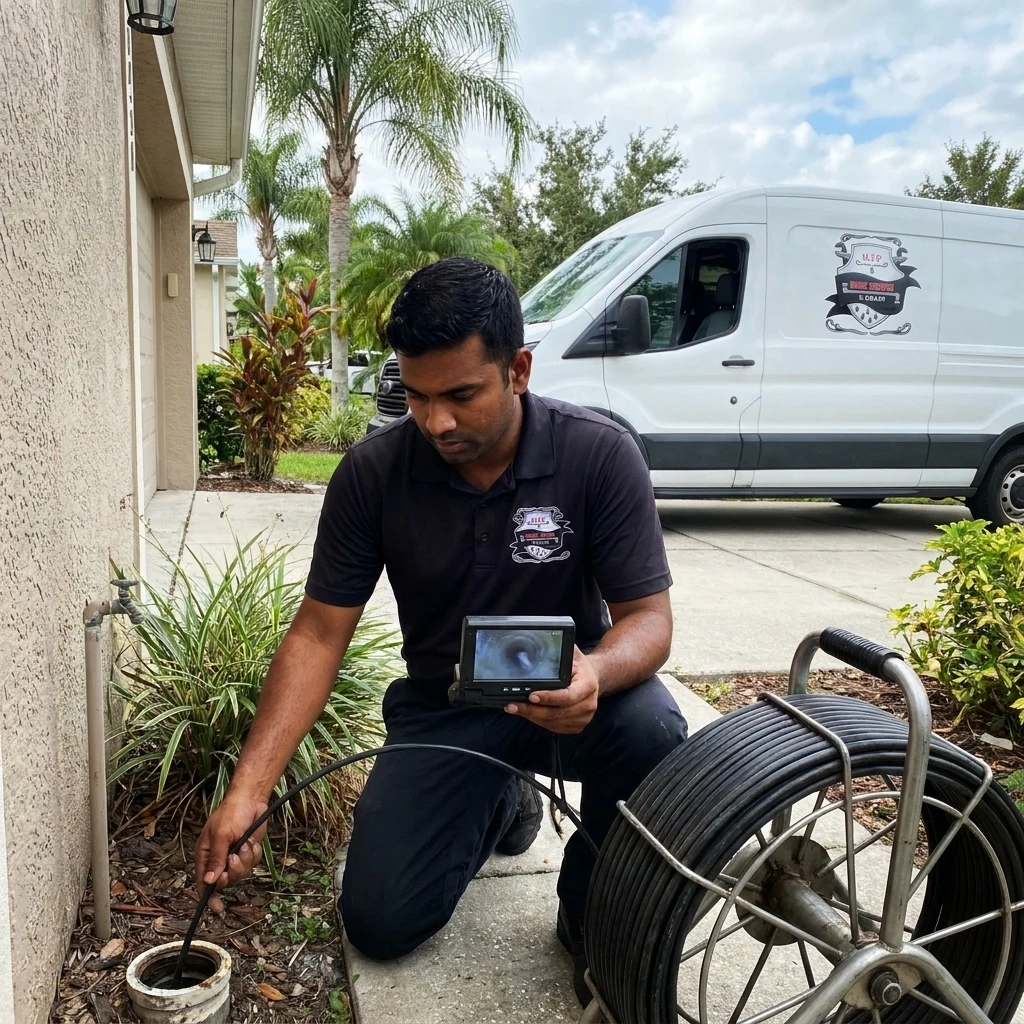
That is the reason a sewer camera inspection comes first on any line we have not seen. The video shows material, offsets and cracks, and it tells the operator which nozzle to start with and how much pressure the pipe can take. A stand-alone inspection is $150 to $300.
Questions Worth Asking a Contractor
- What pipe material do you expect I have, and how will you confirm it?
- Will you run a camera before and after?
- Which nozzle will you start with, and why?
- What happens if the camera shows a cracked or collapsed section?
- Is the price written down before work starts?
Any honest company can answer those without quoting a psi figure. If you want to see how pricing fits in, the hydro jetting cost guide lays out the ranges, and our hydro jetting service page describes what a standard visit includes.
Rather have it handled?
Call or text and we will give you a written estimate for the job.
CALL 813-733-7188Jetter PSI and GPM FAQs
Plumbing contractors commonly quote working pressures from about 1,500 to 4,000 psi, with a lower ceiling for coated or fragile pipe. The right setting depends on pipe material and condition, which is why a camera check comes first.
Neither works alone. Pressure breaks material loose and flow carries it out of the line. For a residential drain, enough flow to move debris is often what separates a clean pipe from one that clogs again downstream.
It can if the pressure is wrong for the material. Modern PVC and ABS tolerate residential jetting well. Corroded cast iron, cracked clay and Orangeburg are riskier, so a camera inspection decides the approach before any work begins.
Some will. The honest answer is that the pressure used on your line is chosen by pipe material and what the camera shows, not set at the machine's maximum. Ask how they decide, rather than only what the rig can do.