Root problems get two kinds of sales pitches. One says pour a foaming product down the toilet and the roots die. The other says cut them out with a spinning blade or a jet. Both can be the right answer. Both can also be the wrong one. The difference is what is in the pipe, and you cannot tell that from the driveway.
How Roots Get Into a Sewer Line
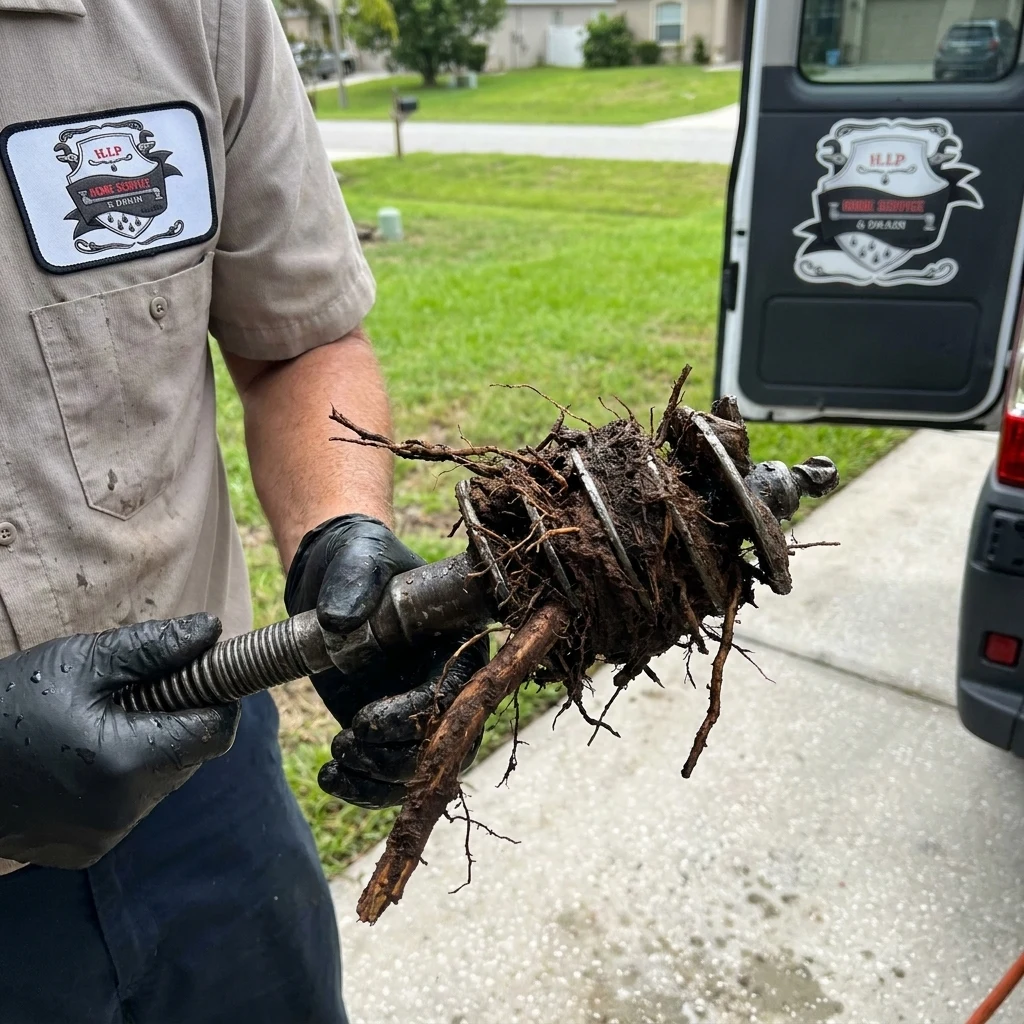
Roots do not bore through sound pipe. They follow moisture and find a way in: a loose joint, a hairline crack, a slightly offset coupling. Once a few hair-thin feeder roots get inside, they find a steady supply of water and nutrients, and they thicken. Within a season or two the mass can catch toilet paper and grease and turn into a full blockage.
Pipe material matters here. Older clay tile, cast iron and Orangeburg laterals have many joints or weak walls, so they are more vulnerable. PVC, which makes up most Wesley Chapel housing built since 2000, has tight glued or gasketed joints and is far harder to invade. That does not make roots impossible in newer areas. Wet-season ground, with saturated sand pressing on joints, gives roots plenty of motivation to find any weak point. The oldest, most heavily landscaped pockets, such as Temple Terrace with its mature oaks, are where we expect the worst cases.
What Chemical Root Killers Do
Foaming root killers are herbicides or contact poisons meant to coat the pipe and kill the root tissue that is inside it. Used properly, they can slow regrowth after a line has been cleared, and some homeowners use them as a yearly maintenance step.
The limits are real:
- They do not clear a blocked line. A dead root is still a root. It stays in place until something removes it, and it can keep catching debris.
- Foam only goes so far. It tends to work where the pipe is filling. A line that is already backing up gives the product nowhere to sit.
- They never touch the tree. The roots outside the pipe survive and the cycle restarts at the same joint.
- Labels carry warnings. Read them, particularly if the property is on a septic system, and keep products away from reclaimed-water irrigation lines.
What Mechanical Cutting and Jetting Do
Mechanical cutting uses a rotating blade or chain on a cable to saw roots off at the pipe wall. A jetter uses a root-cutting nozzle, a nozzle with angled jets that slice roots with water. Both physically take the roots out. Jetting then flushes the pieces down to the municipal connection, rather than leaving them for the next toilet paper wad to catch on.
Here is the catch: root-cutting nozzles generally want more flow than a small residential machine moves, so a thick, dense mass may need a mechanical cutter head first, with jetting after to wash the pipe clean. The camera is what shows which route the line needs. Our root removal and line clearing page describes both.
Side by Side
| Chemical root killer | Root cutting or jetting | |
|---|---|---|
| Clears an existing blockage | No | Yes |
| Removes roots from the pipe | No; kills them in place | Yes |
| Slows regrowth | Sometimes | Not by itself |
| Works on a broken pipe | No | No; the pipe needs repair |
| Needs a camera first | Helpful | Strongly recommended |
Who Should Decide, and How
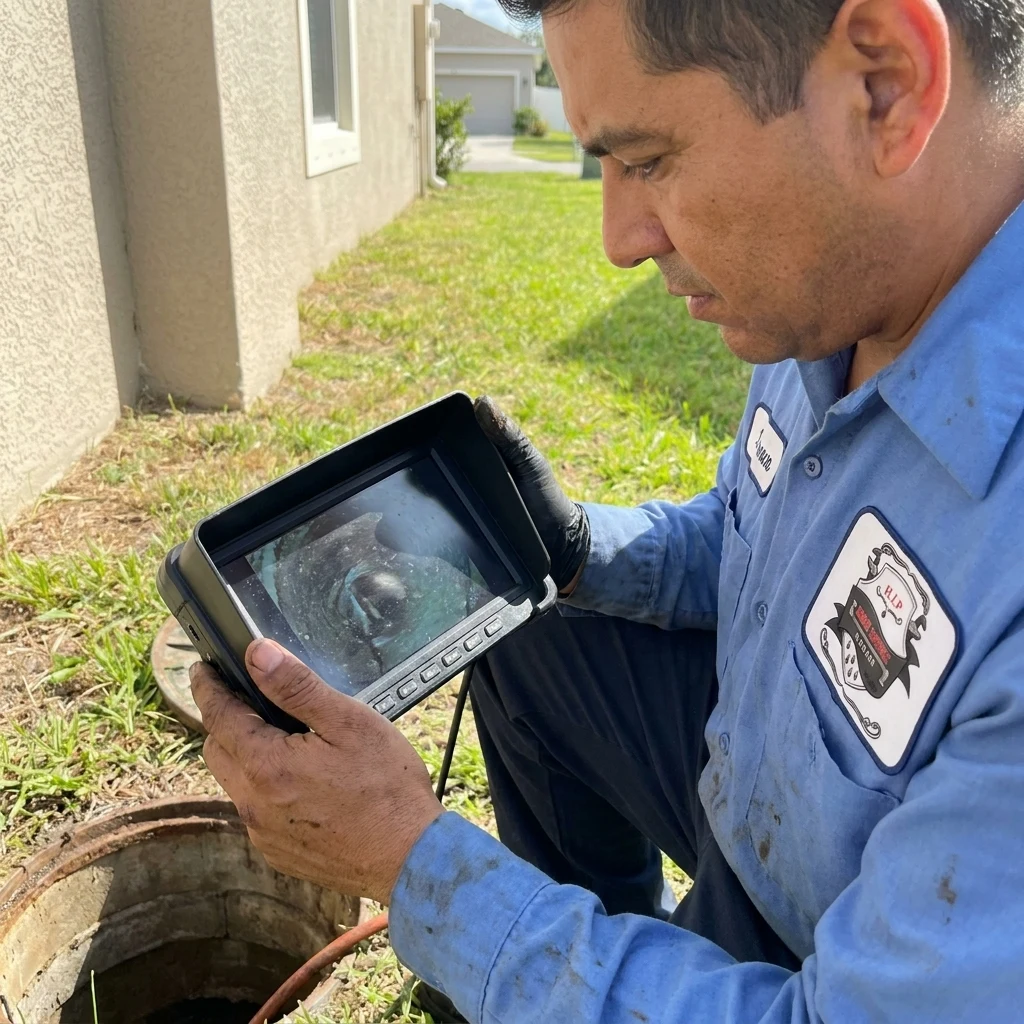
The camera should. A sewer camera inspection ($150 to $300 on its own, often credited toward the work the same visit) shows whether the roots are thin hairs at a joint or a thick mass, where the entry point is, and whether the pipe is actually cracked. From that, the decision is usually straightforward:
- Hairline roots at a joint in sound pipe: jet it clean, then consider a maintenance treatment.
- A thick mass: mechanical cutting first, then jetting. Main line hydro jetting with moderate roots runs $400 to $750; a main line snake is $225 to $450.
- A cracked, collapsed or offset section: cutting only buys time. The pipe needs a repair contractor, and we will say so.
What Neither Option Does
Neither removes the cause. As long as the tree is alive and the joint is loose, roots will return. Clearing the line on a schedule, often every year or two for a known problem, is the practical answer, and the camera video tells you how fast it is regrowing. Neighborhoods with fairways and mature plantings, like Lexington Oaks, are good candidates for that kind of schedule; the newest subdivisions usually are not.
If you want to see how a visit is laid out from camera to final check, read what to expect during a hydro jetting visit.
Rather have it handled?
Call or text and we will give you a written estimate for the job.
CALL 813-733-7188Root Removal FAQs
No. It is meant to kill root tissue that is already inside the pipe, but dead roots stay in place and can keep catching debris. A blocked line has to be cleared mechanically or with a jetter first, and the product then helps slow regrowth.
Yes, with a root-cutting nozzle it slices roots and flushes the pieces away. A thick, dense mass may need a mechanical cutter head first because root nozzles generally want more flow than a small residential machine moves.
It depends on the tree, the joint and the season. If roots entered once, expect them to return at the same joint. A camera pass after cleaning shows how quickly they are coming back and sets a sensible schedule.
They usually invade through joints rather than breaking sound PVC. Most of the area's housing built since 2000 is plumbed in PVC, which is far less vulnerable than clay, cast iron or Orangeburg, though loose joints can still let roots in.
Cutting the roots only buys time. A cracked or collapsed section is a repair job for a plumber or repair contractor, and we will tell you plainly if that is what the video shows, before anything else is done.